
YOUTH NETWORKS FROM ACROSS REGIONS EXCHANGE BEST PRACTICES ON CLIMATE-INFORMED PEACEBUILDING
JOINT ASEAN-IPR & ZIF NEWS UPDATE
Wednesday, 18 November 2026
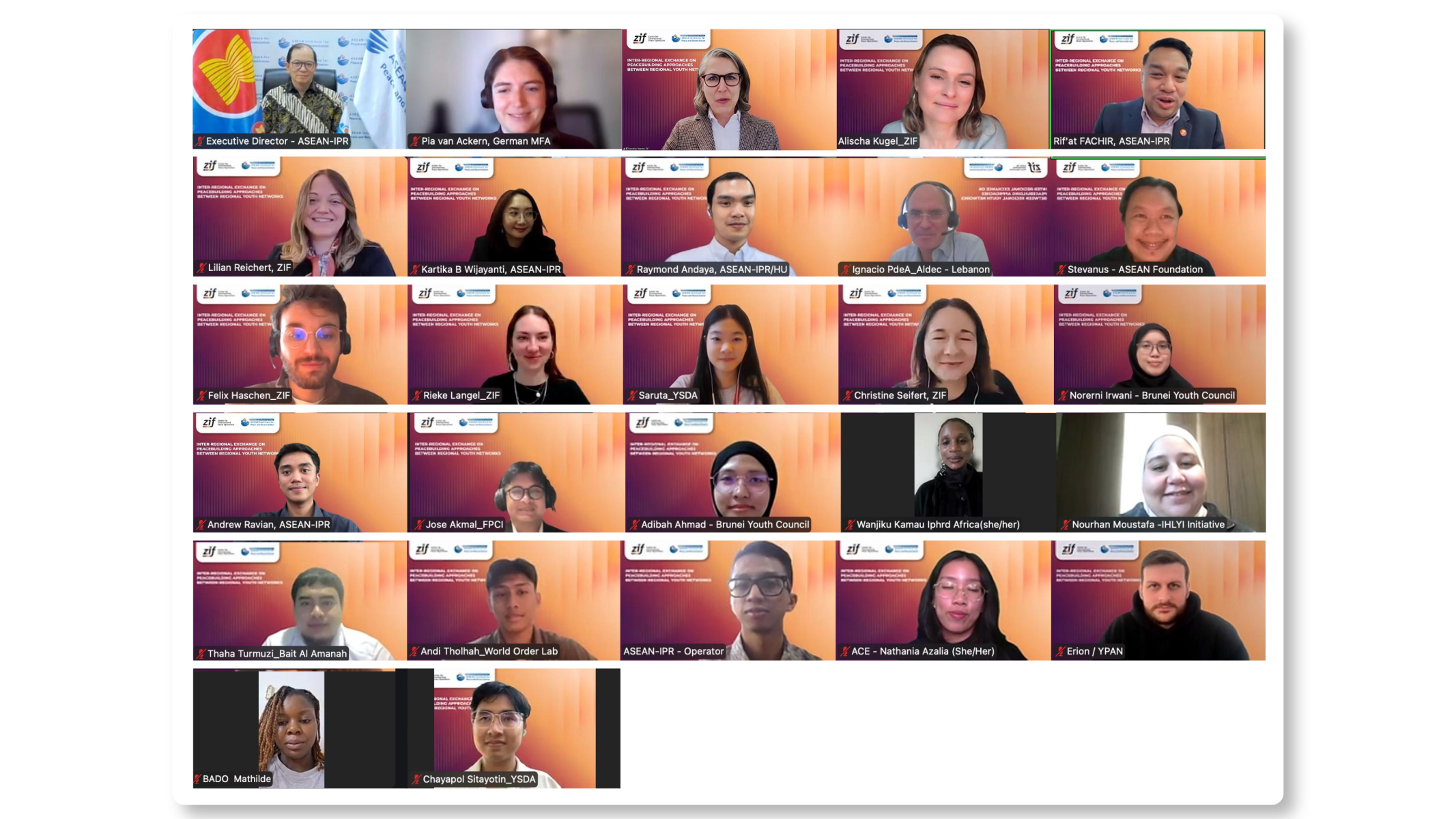
More than twenty youth participants from across the globe – coming from Southeast Asia, Balkans, Middle East and North Africa, as well as Western and Eastern African Region – gathered virtually to discuss environmental and climate-informed peacebuilding. This was the flagship session of the Inter-Regional Exchange on Peacebuilding Approaches between Regional Youth Networks, co-organised by the ASEAN Institute for Peace and Reconciliation (ASEAN-IPR) and the German Center for International Peace Operations.
The Exchange was convened on the day of ASEAN-IPR’s 14th Anniversary, as highlighted by Executive Director R.M. Michael Tene in his opening remarks. The ED of ASEAN-IPR also underlined that the Exchange was designed by ASEAN-IPR and ZIF with clear objectives and purposes, including (1) to enable peer exchange on concrete practices from youth-led peace-work; (2) to identify approaches that can travel across regions and capture them in a good-practice collection; and (3) to lay the foundation for a continuing inter-regional platform.
This flagship session of the Exchange focused on the nexus between peacebuilding and climate change/climate security, highlighting the UN Peacebuilding Fund review finding that climate action and natural resource cooperation are effective entry points for youth participation in peace processes. The Exchange was also building on another activity from ASEAN-IPR two weeks prior in Sunway, Malaysia, which focused on preparing the future communities to face climate-related security risks.
During the Youth-Exchange, participants identified shared challenges in linking climate and peace work, discussed commonalities and differences across regions, shared good practices and cross-regional perspectives to address priority challenges.
Amongst the shared and cross-regional best practices and/or solutions noted were investing in sustainable partnerships and collaborations to offset funding shortages through sharing of resources and expertise, mainstreaming environmental peacebuilding approaches as common ground for dialogue on peace and security and by creating networking and dialogue platforms to increase young people’s access to decision makers.
Dr. Astrid Irrgang, Executive Director of ZIF, closed the flagship Exchange. She remarked that environmental and climate-informed peacebuilding can create opportunities for cooperation, dialogue and collective action and that young people with their knowledge of your local contexts, creativity and ability to mobilise communities are indispensable resources for building on these opportunities. Underlining that young people must be seen as partners in shaping peacebuilding engagements, Dr. Irrgang expressed hope that the exchange my serve as a starting point for continued dialogue.
If you or your network/institution is interested to participate and contribute to future iterations of the Youth Exchange, please send your inquiry to ADMIN@asean-aipr.org or mediationsupport@zif-berlin.org. Also, be sure to visit our websites and connect with us on social media.
*******